

Visual Tracking in Sports Why it Matters and How to Train It
Visual Tracking is a core perceptual skill that separates elite athletes from the rest. Whether you play baseball soccer tennis or basketball the ability to follow moving objects with the eyes and link that motion to motor responses is essential. This article explores what Visual Tracking is why it matters in sport and how athletes can develop this ability with practical drills measurement strategies and technology backed methods.
What is Visual Tracking
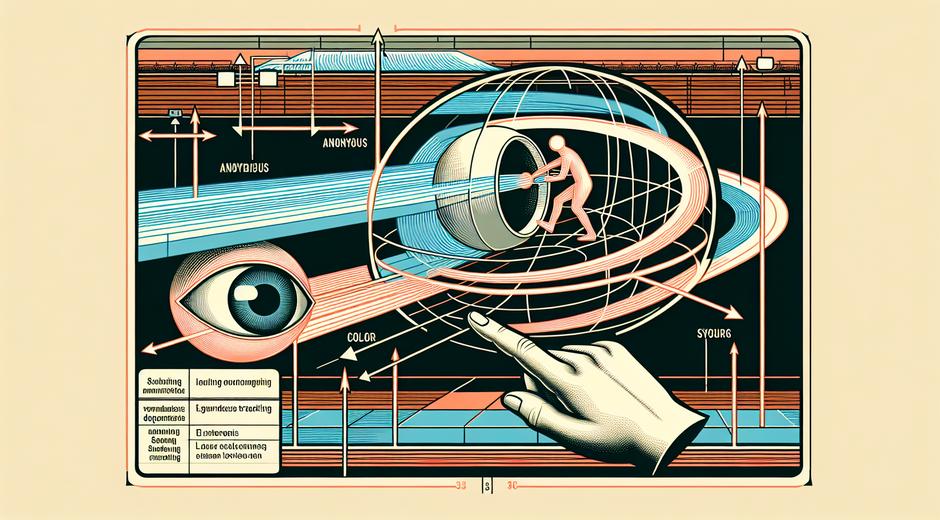
Visual Tracking refers to the capacity to follow a moving target smoothly and accurately. It involves several brain and eye functions working together. Smooth pursuit allows the eyes to follow predictable motion while saccades are quick jumps that reposition the gaze. Peripheral awareness helps athletes monitor objects or players outside the central gaze. Together these elements enable players to track a ball anticipate its path and time their actions.
Why Visual Tracking is Crucial for Athletes
In sports every split second counts. Strong Visual Tracking improves decision making and timing. For example a batter who can track the spin and speed of a pitch will choose a swing path with greater accuracy. A goalkeeper who tracks the run of an attacker and the flight of the ball can position more effectively. Visual Tracking also reduces cognitive load by making motion prediction more automatic allowing athletes to focus on strategy and execution.
Coaches and trainers recognize this and many sports performance teams include vision training in their programs. Evidence shows that targeted Visual Tracking training can boost on field performance reaction time and situational awareness.
Key Components of Visual Tracking
- Smooth pursuit The ability to follow a moving target with continuous eye motion.
- Saccadic accuracy Quick eye jumps to refocus between targets without overshoot.
- Peripheral awareness Monitoring the space outside central vision for additional cues.
- Depth perception Judging distance and closure rate of objects in motion.
- Predictive tracking Using motion cues and past experience to anticipate where the object will be next.
How to Assess Visual Tracking
Simple field tests can reveal baseline strengths and weaknesses. Coaches use drills that require athletes to track moving objects while responding with a motor action. Clinics and labs use eye tracking systems that record gaze patterns saccade metrics and smooth pursuit quality. For teams seeking a central resource on drills and progress tracking visit sportsoulpulse.com for guides and drill libraries tailored to multiple sports.
Training Methods for Better Visual Tracking
Training Visual Tracking does not require complex gear. Many effective methods use little equipment and focus on repetition and variability. Below are practical approaches that coaches and athletes can apply.
- Ball toss tracking A coach tosses a ball at different speeds and trajectories while the athlete follows the ball with the eyes and calls out trajectories or colors. This reinforces smooth pursuit and predictive tracking.
- Reaction catches Use smaller balls or bean bags launched unpredictably. The athlete must track the object and respond with a catch. This blends visual tracking with motor execution.
- Visual ladder Move the eyes through a grid of numbered targets while maintaining head stability. This trains saccadic accuracy and gaze discipline.
- Peripheral awareness drills Have athletes focus on a central target while calling out stimuli that appear in the periphery. This boosts the ability to monitor multiple players or objects in game like scenarios.
- Video based prediction Use short clips of plays and pause at various points. Ask athletes to predict where the ball or player will move next. This builds anticipation and pattern recognition.
Sport Specific Visual Tracking Drills
Visual Tracking demands vary across sports. Tailor drills to mimic game conditions for better transfer.
- Baseball Use multiple pitch speeds and spin types. Practice tracking from release to contact point then simulate swing timing without hitting a ball to reinforce visual information only.
- Soccer Focus on tracking players and ball while shifting gaze between near and far targets. Include crossing drills where the athlete must track the ball in air and head or volley at a moving target.
- Tennis Work on tracking high spin serves and low ground strokes. Train anticipation for return angles with partner drills that vary shot placement unpredictably.
- Basketball Simulate fast breaks where the athlete tracks the ball carrier and potential passing lanes. Include drills where the athlete tracks the ball while preparing to shoot or defend.
- Goalkeeping Combine tracking of penalty kicks and crosses with body positioning drills. Goalkeepers benefit from training that sharpens both central tracking and wide peripheral monitoring.
Technology and Tools That Help
Modern tools make Visual Tracking training precise and measurable. Eye tracking systems record gaze coordinates and generate heat maps of attention. Strobe eyewear temporarily blocks vision at set intervals forcing the brain to rely on predictive cues and to refine motion anticipation. Virtual reality environments let athletes practice tracking within immersive simulated plays. Reaction time devices and wearable sensors provide feedback on motor response linked to tracking performance.
For athletes who want to look and feel their best during intense training and frequent travel consider products that support recovery and skin care to maintain peak confidence off the field. Try items from a curated source such as BeautyUpNest.com to complement your overall training routine.
How to Build a Visual Tracking Routine
Progressive structure improves outcomes. A weekly plan might include short daily sessions focusing on core tracking skills plus longer weekly sessions that integrate decision making and sport specific drills. Sample routine:
- Daily 10 minute smooth pursuit and saccade sets using ball toss and visual ladder
- Two weekly 20 minute sport simulation sessions with variable trajectories and speeds
- Weekly video review to reinforce predictive decision strategies
- Periodic assessment with eye tracking or coach observed metrics every four to six weeks
Measuring Improvement
Track performance objectively and subjectively. Objective metrics include reaction time catch success rate and accuracy of gaze fixation in lab assessments. Subjective measures include perceived ease of tracking during play and coach feedback on decision timing. Combining both gives a clearer view of transfer from practice to competition.
Common Mistakes to Avoid
- Avoid training Visual Tracking in isolation without integrating motor responses. Transfer happens when perception and action are combined.
- Do not overtrain with monotony. Vary speeds angles and context to force adaptation.
- Do not ignore recovery. Visual fatigue reduces performance so include rest and eye health practices.
Conclusion
Visual Tracking is a trainable and measurable skill that has direct impact on sport performance. With consistent practice technology assisted assessment and sport specific integration athletes can sharpen their ability to follow moving objects and make better game time decisions. For more sport specific content training guides and the latest drills visit sportsoulpulse.com and explore resources that help you turn visual skill into on field advantage.