

Pacing Strategy That Wins Races and Improves Performance
Mastering a pacing strategy can be the difference between a personal best and a missed opportunity. Whether you are an endurance athlete a team sport player or a fitness enthusiast the way you distribute effort across time affects speed economy and recovery. This guide explains what a pacing strategy is why it matters and how to create one you can use in training and competition.
What a pacing strategy really means
A pacing strategy is a plan for how you will use your energy and effort during an event or training session. It covers how fast you start when you accelerate how you hold effort through the middle and how you finish strong. A good pacing strategy balances physiological limits with tactical goals so you get the most from your fitness on race day.
Why pacing strategy matters for all sports
Many athletes make the mistake of starting too fast or waiting too long to accelerate. That wastes stored energy and leads to a drop in performance late in the event. A smart pacing strategy helps you avoid common errors by aligning effort with the demands of the course the distance and your current fitness. It also reduces injury risk by preventing repetitive overload in the first phases of exercise.
Core types of pacing strategy to know
There are several broad approaches you can use depending on event length and terrain. Even pacing means holding a consistent speed or power through the effort. Negative split means you perform the second half faster than the first half. Positive split means the second half is slower than the first half and is usually a sign of poor planning or too aggressive a start. Surge based pacing uses planned increases in effort at strategic moments to gain an advantage or respond to competitors. Each approach has pros and cons and the best choice depends on distance race tactics and your individual strengths.
How to build a pacing strategy step by step
Step one know the event profile. Study course layout turns elevation and likely weather. Flat courses favor even pacing while hilly routes need more adaptive strategies. Step two quantify your current fitness. Use recent time trials lactate results heart rate zones or power data to set realistic targets. Step three set realistic splits. For example plan a slightly conservative start for long distances and aim to accelerate in the second half if you can sustain it. Step four rehearse the plan in training with sessions that replicate race intensity and transitions. Step five refine using post session data and feel.
Using data for an objective pacing strategy
Modern athletes use heart rate power and pace meters to create data driven pacing. Heart rate gives a view of internal load but lags behind sudden effort changes. Power meters shown in cycling and some running tools provide immediate output feedback and allow precise control. Pace remains the most direct measure for running but can vary with wind or terrain. Combining metrics and listening to perceived effort gives the most complete picture.
Sport specific pacing strategy tips
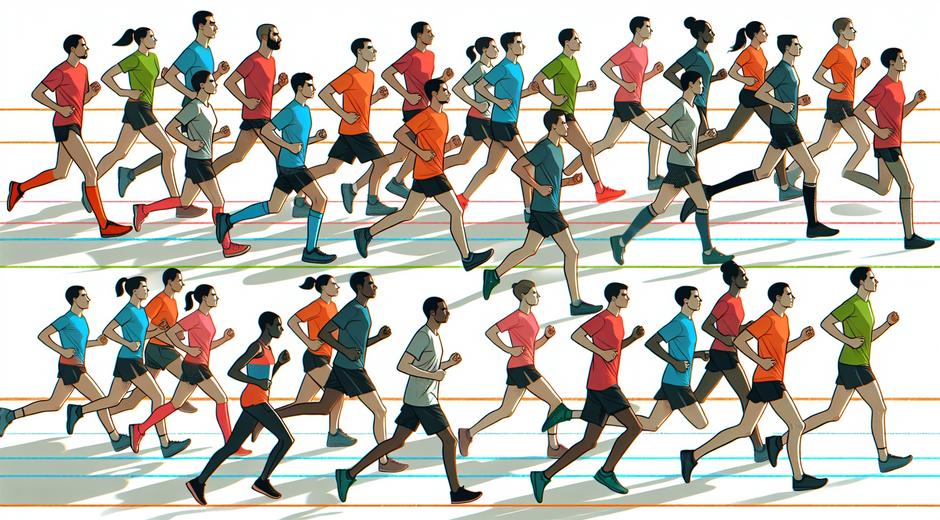
Running For a 5k a fast even pace with a controlled start often beats an all out first kilometer that leads to burnout. For marathon a conservative first half with a targeted negative split or steady pace preserves glycogen and maintains form. Cycling In road races manage your power in climbs and descents and avoid red lining early in long events. Time trials demand steady power while mass start races require flexibility. Swimming Smooth stroke rate control and steady breathing can sustain speed through long sets. Team sports Use pacing strategy to manage shifts and substitutions so your best players can deliver high intensity when it matters most.
Nutrition hydration and recovery as part of pacing strategy
Fueling plays a major role in how well a pacing strategy works. For long events plan your carbohydrate intake to maintain blood glucose and delay fatigue. Hydration strategy should match expected sweat loss and environmental conditions. Recovery between training sessions including sleep and active recovery determines how well you can execute planned paces in subsequent workouts. Treat nutrition and recovery as tools that support your pacing plan not as separate items.
Mental skills and race day execution
Confidence focus and the ability to stick to a plan under stress are often the deciding factors. Mental rehearsal and visualization help reinforce the pacing plan so you follow through on race day. Breathing techniques and simple cues can calm your nervous system when competition adrenaline pushes you out of your plan. For focused mental training explore resources at FocusMindFlow.com which offers tools for concentration and performance under pressure.
Common pacing strategy mistakes and how to avoid them
Starting too hard Trying to make up time early usually leads to severe slowing later. Avoid this by setting concrete early splits and using a device that alerts you when you exceed target effort. Ignoring course terrain Failing to adjust for hills or heat will break plans that assume ideal conditions. Practice on similar terrain and build contingency plans. Over relying on one metric Heart rate only or pace only approaches can mislead. Combine metrics power pace and perceived exertion for robust control. Not practicing the plan Many athletes have plans on paper that fail because they never rehearse pace under fatigue. Include race pace sessions in training so the plan becomes muscle memory.
Examples of simple pacing templates
Short events up to 10k Warm up thoroughly then aim for an even or slightly faster second half. Long events over 10k Begin conservatively hold a steady effort in the middle and accelerate if energy allows. Hilly events Break the course into segments and manage effort per segment instead of aiming for steady pace. Use a scale of perceived exertion to guide effort on climbs and descents. Team rotation events Use substitution windows to ensure players recover enough to produce planned bursts of high intensity.
How to measure progress and refine your pacing strategy
Collect data from each event and training session looking for trends in split times heart rate drift power decline and perceived difficulty. Use this feedback to adjust target paces and fueling. If your splits remain uneven identify if the cause is pacing planning fueling or environmental factors. Regular testing through controlled time trials helps recalibrate targets as fitness changes.
Putting it all together
Creating an effective pacing strategy takes information practice and adaptability. Start with the event profile and your fitness set realistic targets use data and feel to guide execution and rehearse the plan until it becomes second nature. Nutrition recovery and mental training amplify the effect of a good plan and help you perform under pressure. For more training articles plans and sport specific guides visit sportsoulpulse.com and explore detailed resources that match your sport and goals.
Final thoughts
Pacing strategy is not a one size fits all formula. It is a living plan that evolves as you gain fitness and experience. Use the principles here to create a plan that suits your event and your strengths. Measure refine and practice and you will find races and sessions where every ounce of fitness is used efficiently and your results improve. Start simple build consistency and let smart pacing take you to faster times and better performances.