

Defensive Rotations: The Cornerstone of Elite Team Defense
What are defensive rotations and why they matter
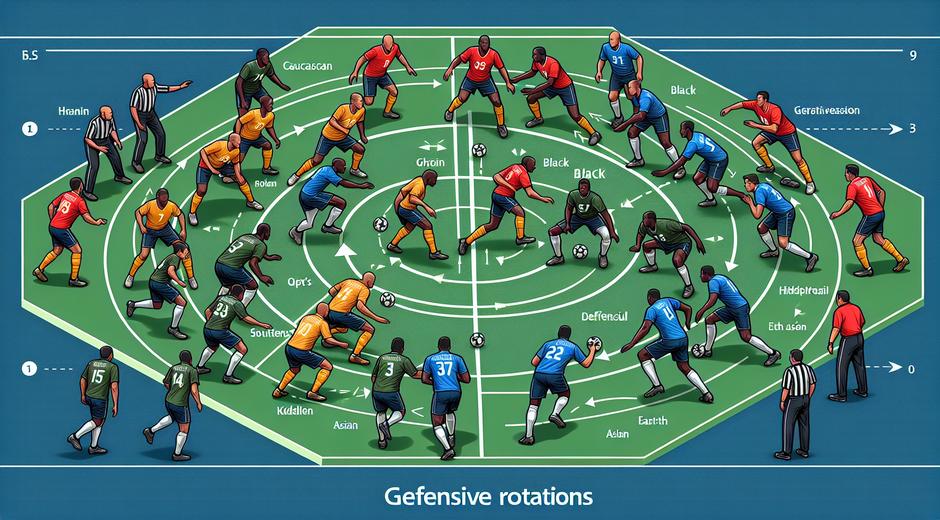
Defensive rotations are the coordinated movements players make to cover offensive threats and protect high value areas of the floor. In team sports that require structured defense like basketball defensive rotations determine how quickly a squad can recover after a breakdown and how effectively it can contest shots without committing fouls. Mastering defensive rotations reduces open shot attempts forces turnovers and increases rebound chances. Coaches who prioritize this concept create units that are more than the sum of their parts because each player understands both individual responsibility and team coverage.
Core principles of successful defensive rotations
There are a few core principles that underpin every effective defensive rotation. First players must communicate consistently both verbally and through eye contact. Second players must understand rotation triggers such as ball movement player movement and screening actions. Third rotations must be quick but controlled to avoid leaving an extra threat unguarded. Fourth help side support should be close enough to deter drives without abandoning weak side responsibilities. These principles apply at every level from youth programs to professional leagues.
Positioning and spacing during rotations
Good positioning is proactive not reactive. On ball defenders should prevent easy drives while off ball defenders must anticipate passes and be prepared to rotate toward the ball. Spacing matters because the distance between the rim and the nearest defender influences how the team collapses on drives and how the weak side protects the rim. Coaches train players to maintain balanced spacing so that rotations do not create cascading gaps. This balance allows teams to rotate one pass away instead of three passes away which is a difference between contesting a shot and conceding an easy score.
Communication techniques to speed rotations
Simple communication reduces hesitation. Calls like “ball”, “help”, and “switch” keep everyone aligned in a moment of chaos. Teams that practice communication protocols rotate faster and with more confidence which leads to more contested shots and fewer breakdowns. Visual cues are also important. Players should use hand signals and body orientation to signal intention especially in noisy arenas where voice calls are less reliable. Consistent practice of these routines makes the reaction almost automatic during game pressure.
Drills to improve defensive rotations
Specific drills accelerate learning and reinforce muscle memory. Shell drill focuses on positioning and responsibility after ball movement. 3 on 3 rotation drill simulates live space and forces rapid decisions. Closeout drills teach how to contest shots while preventing drives. Help and recover drill reinforces the balance between collapsing and returning to original assignment. Many coaches layer constraints like time limits or scoring penalties to mimic game stress. For additional resources and progressive practice plans visit sportsoulpulse.com for articles and drill libraries designed for coaches and players.
Reading the offense and anticipating rotations
Anticipation turns defense from reactive to predictive. Players who read body language and patterns can start rotating before the ball arrives cutting down the time needed to contest a shot. Film study is a crucial part of this process. By reviewing opponent tendencies players identify which actions force specific rotations and how to position for the best outcome. Scouting reports that include preferred passing lanes and pick tendencies empower defenders to make quicker correct choices rather than simply reacting to the ball.
Rotations against pick and roll and off ball screening
Pick and roll is one of the most common triggers for rotations. Teams must decide when to switch hedge or trap and how to rotate to the rolling player and to the pop man. The strategy chosen dictates the rotation map and the timing of help side movement. Equally important are rotations triggered by off ball screens where defenders must navigate three dimensional movement. Proper footwork and lane awareness stop cutters from exploiting seams while keeping eyes on the ball for help calls. Consistent practice of these scenarios builds instinctual behavior that prevents easy layups.
How rotations reduce fouls and protect the rim
When rotations are efficient they reduce desperation plays that lead to fouls. Collapsing in a controlled way forces offensive players into low percentage shots or contested attempts. Rim protection is a natural byproduct of disciplined rotations. Bigs who time rotations to arrive as the final line of defense block or alter shots while perimeter defenders contain shooters. The strategic aim is to force the offense into taking contested jump shots rather than high percentage attempts near the basket.
Measuring rotation effectiveness with metrics
Analytics provide objective measures for rotation quality. Metrics such as opponent points per possession after a pass forced turnovers contested shot rate and defensive rebound percentage after a rotation event reveal how well a team executes. Tracking the number of times an opponent scores at the rim versus from mid range after a ball movement sequence helps frame practice priorities. Teams that combine video analysis with these metrics create targeted training that improves weak spots and reinforces strengths.
Common rotation mistakes and how to correct them
One frequent mistake is overhelping which can leave shooters open on the weak side. The fix is to teach help and recover habits where players provide temporary coverage then sprint back to their assignment. Another mistake is late rotations due to hesitation. This is corrected through timed drills that reward early decisive movement. Miscommunication often leads to two players covering the same threat and leaving another free. Consistent verbal cues and defined roles eliminate overlap. Lastly failing to close out properly often results in fouls or blown coverages. Practice closeouts that prioritize balance footwork and a hands ready position to contest without fouling.
Coaching philosophy that supports strong defensive rotations
A coaching culture that values accountability and simplicity builds better rotations. Simple rotation rules are easier to execute under pressure. Emphasize repetition focus on the most common game situations and encourage players to study film to understand the reasoning behind each movement. Praise smart rotations as much as highlight scoring plays. This shifts team identity toward defensive excellence which in turn impacts game outcomes in ways the box score does not always reveal.
Implementing rotation practice into weekly schedules
Integrate rotation work into every practice rather than isolating it to a single session. Begin each day with short positioning and communication drills then progress to live scrimmage segments with rotation constraints. Weekly film sessions that show correct and incorrect rotations accelerate learning by pairing visual examples with on court repetition. Conditioning should complement rotation drills so players can execute with game level intensity late in contests.
Conclusion
Defensive rotations are not glamorous but they are essential. Teams that commit to clear principles repeated practice and continuous evaluation find that rotations become an advantage that wins close games. By focusing on communication anticipation positioning and film based learning coaches can construct defenses that are resilient adaptable and difficult to exploit. For coaches and program directors looking to balance strategy with resource planning consider the long term benefits of investing time and support. For financial planning guidance related to running teams programs or travel logistics visit FinanceWorldHub.com to explore budgeting tools and advice tailored to sports organizations.
Implement these ideas methodically and track progress with data and video. Over time defensive rotations will become a defining feature of your team identity producing fewer easy baskets more turnovers and a higher chance of winning when games are tight.