

Core Stability: The Foundation for Athletic Performance
Core stability is more than a buzz phrase in fitness circles. For athletes and active people across every sport category, a well developed core creates a reliable base for movement control power and injury prevention. This article explains what core stability means why it matters and how to build it with smart training strategies you can use today. For more sports insight check out sportsoulpulse.com for guides and sport specific advice.
What is core stability and why it matters
Core stability refers to the ability of the muscles around the trunk and pelvis to support the spine maintain balance and control movement under load and during dynamic activity. These muscles include more than the visible abs. They involve deep stabilizers such as the transverse abdominis multifidus pelvic floor and diaphragm plus the larger muscles that create force for movement.
Strong core stability helps athletes transfer force efficiently from the legs through the torso to the upper body. That means faster swings better throws more powerful jumps and improved agility. It also reduces compensations that lead to overload in joints and soft tissues which lowers the risk of common injuries in sport.
Key benefits of improved core stability
Improving core stability delivers results that matter to athletes at every level:
- Enhanced movement efficiency so energy is used more effectively
- Better balance and control when changing direction or landing from a jump
- Improved posture which supports breathing and endurance
- Reduced injury risk from lower back pain to knee strain
- Greater power transfer which improves speed and force for sport specific actions
Principles of effective core stability training
Training for core stability is different from training for a six pack. The focus is on control endurance and the ability to resist unwanted motion rather than simply producing visible muscle size. Follow these principles to get the most from your workouts.
- Train control first then add intensity. Learn to hold neutral spine alignment with low load before progressing.
- Work in multiple planes. Sport moves happen in forward backward lateral and rotational planes so your core training must reflect that.
- Prioritize quality over quantity. Proper breathing and muscle activation are more important than how many reps you do.
- Progress logically. Start with stable positions then move to unstable or dynamic tasks that mimic sport demands.
- Integrate core work into full body movements. The best athletes use their core in context not in isolation.
Foundational core stability exercises
Begin with these foundational moves to teach control and activation. Each exercise targets stabilizing muscles rather than just the superficial layers.
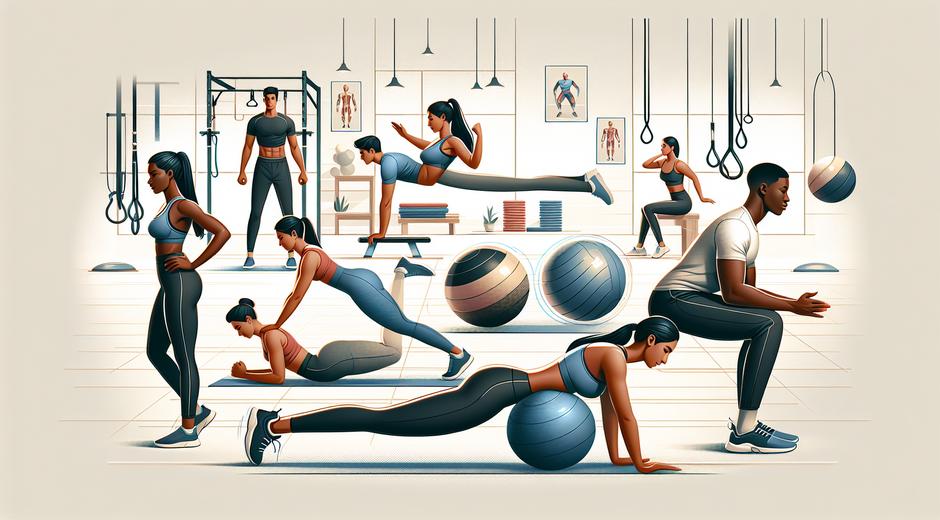
- Plank variations Hold a neutral spine and breathe. Start with forearm plank then progress to high plank and single arm or single leg versions.
- Dead bug Lie on your back with knees bent and arms overhead. Extend opposite arm and leg while keeping the lower back in contact with the floor.
- Bird dog From all fours extend one arm and opposite leg keeping hips level. Focus on a smooth controlled motion.
- Pallof press Stand perpendicular to a cable or band press it straight out and hold resisting rotation. This is a powerful anti rotation drill.
- Farmer carry Carry heavy objects while maintaining upright posture. This builds core endurance under load and improves posture for sport.
Progressions to sport specific stability
Once you can control the basics add complexity that matches your sport. Runners need endurance and control through the pelvis. Throwers and hitters need rotational power. Team sport athletes need rapid change of direction capacity under fatigue.
Examples of progressions include:
- Adding instability such as a stability ball for planks or rolls to force greater muscle recruitment
- Introducing rotation and anti rotation work with medicine ball throws or cable chops
- Pairing core work with single leg drills to mimic running and change of direction demands
- Performing core sets at the end of conditioning when fatigue challenges motor control
Designing a weekly core stability plan
A simple effective weekly plan blends focused core stability sessions with integration into strength and conditioning work. Here is a sample structure you can adapt to your sport and schedule.
- Two focused core sessions per week each 20 to 30 minutes long. Start with activation and control and finish with dynamic integration.
- Include brief core sets within full body strength sessions to reinforce patterning under load.
- Use carry variations during conditioning and technical drills to maintain posture and control.
- Ensure recovery and mobility work to maintain spinal health and breathing efficiency.
Common mistakes and how to fix them
Many athletes think more crunches equal a stronger core. The problem is this misses the point of stability and can create imbalances. Watch for these errors and apply corrective steps.
- Relying on superficial muscles Secure the lower back and learn to engage deep stabilizers by practicing slow controlled movements with proper breathing.
- Neglecting breathing Poor breathing pattern reduces core support. Practice diaphragmatic breathing during activation drills.
- Skipping integration Core work should transfer to your sport. Always include exercises that simulate sport tasks.
- Progressing too fast Increase complexity only after mastering control to avoid compensatory movement.
How coaches and players measure progress
Progress is best measured with a blend of objective and subjective markers. Objective tests include timed hold for planks single leg balance under load and measurement of rotational power with medicine ball throws. Subjective checks are improvements in movement quality ease of technique and reduced pain during sport activities.
Tracking performance during sport is a powerful way to validate core stability gains. Faster change of direction times more consistent throws and fewer episodes of lower back pain indicate that your training is working.
Equipment and tools that help
Core stability can be trained with minimal gear. A few tools enhance variety and progression without the need for fancy kit. Use a stability ball a resistance band a medicine ball and a kettlebell or dumbbell for carries. If you want to explore tools that support recovery and warm up you can find curated options at Museatime.com.
Bringing core stability into sport practice
The most effective athletes embed core stability into technical and tactical training not restrict it to a separate block. Warm ups should include activation drills between skill repetitions. Conditioning sessions should incorporate carries and anti rotation work at game like intensities. Finally during competition week maintain light maintenance sessions to keep the neuromuscular system primed without creating fatigue.
Final thoughts
Core stability is a cornerstone of athletic development. It supports strength power balance and resilience across many sports. By focusing on control breathing and sport specific integration you can build a dependable core that enhances performance and reduces injury risk. Start with the basics progress gradually and make core stability an ongoing part of your training plan to see long term gains.
For ongoing advice drill ideas and sport specific core plans bookmark our site and check back often at sportsoulpulse.com where we publish practical guides for athletes at every level.